

People Analytics has been revolutionizing talent management in HR for years, enabling data-driven decisions that enhance the employee experience.
Traditional employees satisfaction surveys are no longer enough to truly understand what your team needs. Why? Because they often provide surface-level answers and fail to capture employees’ real state of mind.
If you want to design an employee experience that motivates, retains, and drives productivity, you need concrete data—not assumptions.
People analytics is a methodology that transforms raw data into strategic insights to optimize the employee experience and improve business outcomes.
In this article, we’ll show you how to use people analytics to transform your talent management strategy, spot problems before they escalate, and make smarter, more effective decisions.

Let’s dive in!
What is people analytics and why is it key to the employee experience?
People analytics is the use of data and advanced analysis to better understand employee behavior, needs, and expectations.
This methodology allows HR teams to base decisions on objective evidence rather than gut feeling, identifying patterns and trends that impact employee satisfaction and engagement.
In the context of employee experience, people analytics helps answer critical questions such as:
-
What are the main factors driving talent retention in the company?
-
Why are some employees more engaged than others?
-
What aspects of onboarding can be improved to reduce first-year turnover?
-
How does job satisfaction affect team performance and productivity?
Answering these questions with real data enables the design of more effective and personalized HR strategies, ensuring every action has a positive impact on the organization.
People analytics for improving employee experience: the data that matters
Many companies still design their employee experience strategies based on intuition or trendy ideas—without real data to back them up.
The problem? This leads to ineffective initiatives, demotivated employees, and a disconnect between what employees actually need and what the company offers.
Let’s see the difference between a traditional approach and a data-driven one:
Before using people analytics:
-
Employee experience decisions are based on assumptions, not on real data.
-
Satisfaction surveys are generic, with low participation rates and limited useful insights.
-
HR strategies are generalized and not tailored to different employee groups.
-
There’s no clear understanding of which initiatives truly impact satisfaction, retention, or performance.
After applying people analytics:
-
Decisions are based on concrete data, allowing for more effective and targeted strategies.
-
Benefits and programs are customized for different employee segments, ensuring each group gets what they truly value.
-
The real impact of initiatives on key metrics like satisfaction, retention, and productivity is measured and strategies are adjusted accordingly.
-
There’s greater alignment between what employees seek and what the company delivers, boosting engagement and loyalty.
The result is clear: when you move from intuition to data, you truly understand what your employees need—and you make smarter decisions.
Instead of guessing strategies, you create initiatives that work, improve the team’s experience, and achieve tangible business results.
How to use people analytics to enhance employee experience
Applying people analytics to talent management isn’t complicated if you follow a structured approach. Here’s a step-by-step guide to get started:
1. Identify weak points in the employee experience
Before implementing changes, you need to understand what’s not working. Start by analyzing organizational data to spot patterns or problem areas:
-
Engagement survey results: Are there drops in satisfaction among certain groups?
-
Turnover rates: Which departments or roles have the highest voluntary turnover?
-
Performance review: Is there a link between satisfaction and productivity?
For example, if you notice that newer employees tend to resign more often, it could point to issues with onboarding or team integration.
2. Cross-reference different data sources for a more complete picture
Don’t rely on a single dataset. Comparing information from different areas gives you a clearer, more comprehensive view.
By connecting multiple data points, you’ll uncover hidden patterns—for example, that teams with fewer development opportunities have higher turnover, or that employees with low satisfaction rates also take more sick leave.
The key is connecting the dots—because that’s where the real insights are.
3. Create employee “personas” to personalize strategies
Not every employee values the same things. People analytics allows you to segment your workforce into groups with similar needs and expectations so you can design strategies that truly resonate with them.
You might find that younger employees value flexible schedules, while more senior profiles prioritize stability and professional growth.
Armed with this knowledge, you can now move away from one-size-fits-all approaches and deliver benefits that employees actually care about—dramatically boosting engagement and satisfaction.
4. Measure the impact of your strategies and adjust as needed
Implementing changes is just the first step. What really matters is tracking whether they’re working.
Here are some metrics to help you evaluate real impact:
-
eNPS (Employee Net Promoter Score): A quick and effective way to measure overall employee satisfaction.
-
Retention rate: Are employees staying longer after new strategies are put in place?
-
Productivity and performance metrics: Has team efficiency improved following initiatives aimed at optimizing employee experience?
If the data shows that changes aren’t delivering the desired results, that’s okay—you can always adjust, test new solutions, and keep optimizing.
The important thing is to act based on real information—not assumptions.
Redesigning onboarding with people analytics
Imagine your company has a high first-year turnover rate. People analytics can help you find out why.
Step 1: Detect the problem
When analyzing turnover data, you discover that 40% of employees who leave do so within their first year.
Step 2: Investigate the causes
Exit interviews and pulse surveys reveal that many employees feel overwhelmed by the amount of information they receive in their first months and that they lack sufficient support.
Step 3: Apply improvements
Based on this data, you decide to redesign your onboarding process:
-
Assign mentors to new hires to guide them through their first months.
-
Break training materials into smaller, progressive modules rather than overwhelming them all at once.
-
Implement follow-up surveys at 30, 60, and 90 days to detect integration issues early.
Step 4: Measure the results
Six months later, the retention rate among new hires improves by 25%, and feedback from surveys reflects a much more positive onboarding experience.
The future of employee experience is with Team Insights
Using people analytics for talent management is a must for companies that want to attract, retain, and motivate their employees.
Data-driven strategies help you make smarter decisions, reduce turnover, and design work experiences that truly make a difference.
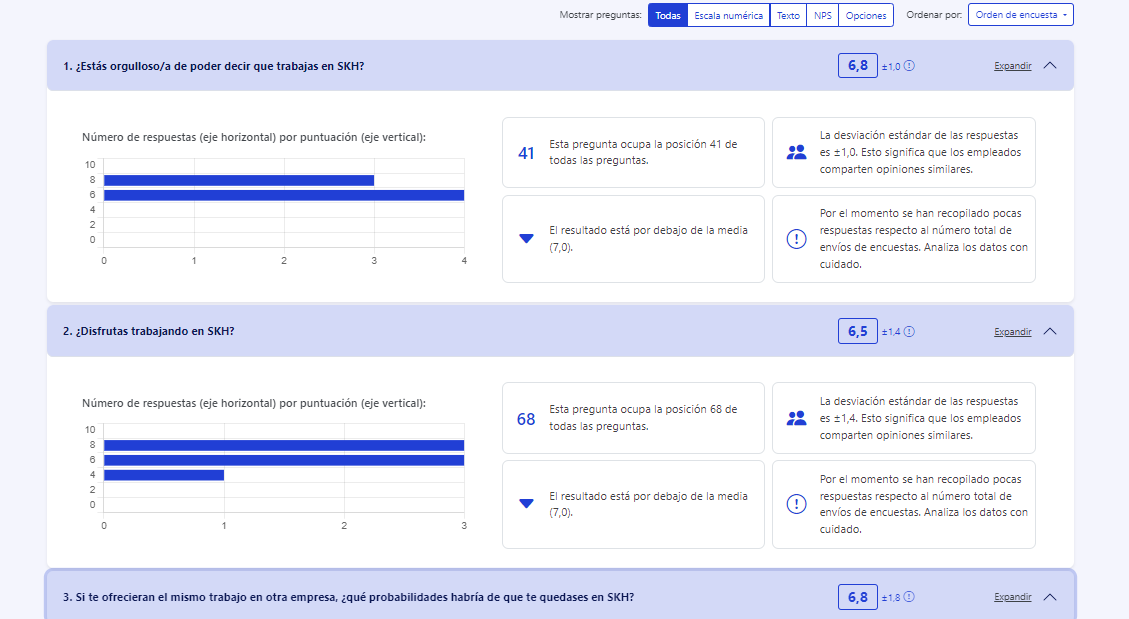
If you want to take your employee experience strategy to the next level, Team Insights can help you measure and improve employee satisfaction with tools built to optimize talent management.
👉 Request a demo and discover how to transform your employee experience with real, actionable data.
